

Can I Eat Normally After Getting All-on-4 Dental Implants?
Last updated September 11, 2026
Yes, you can eat normally again after All-on-4 dental implants. The ability to chew freely, enjoy food without restrictions, and stop worrying about dentures shifting mid-bite is one of the biggest reasons patients choose All-on-4 over traditional options in the first place. Getting there does require patience in the early weeks, but the long-term outcome can be genuinely life-changing.
At Haratz Dental in Aventura, our All-on-4 services are led by Dr. Adela Haratz, Dr. Oliver, and Dr. Michael Maya, whose combined experience means you receive coordinated care from implant placement through final restoration. We walk every patient through exactly what to expect at each stage, including what to eat and when.
What the Eating Timeline Looks Like
Eating normally after All-on-4 is a process that unfolds in phases rather than all at once. The first few weeks after surgery call for soft foods while your implants begin integrating with the jawbone, a biological process known as osseointegration. According to Cleveland Clinic, once implant-supported dentures fully heal and the final prosthesis is in place, patients can enjoy their favorite foods without restriction.
In the days immediately following surgery, the priority is to protect the surgical sites and give your implants a stable environment to heal. The foods that work best during this window are soft, easy to manage, and gentle on healing tissue. Some of the most common choices patients rely on during early recovery include:
- Yogurt and smoothies: Easy to consume with no chewing required and packed with nutrients to support healing
- Mashed potatoes and soft vegetables: Filling and satisfying without putting pressure on the implant sites
- Scrambled eggs and soft fish: Excellent protein sources that require minimal effort to eat
- Oatmeal and soft cereals: Gentle and nourishing options for the first days after surgery
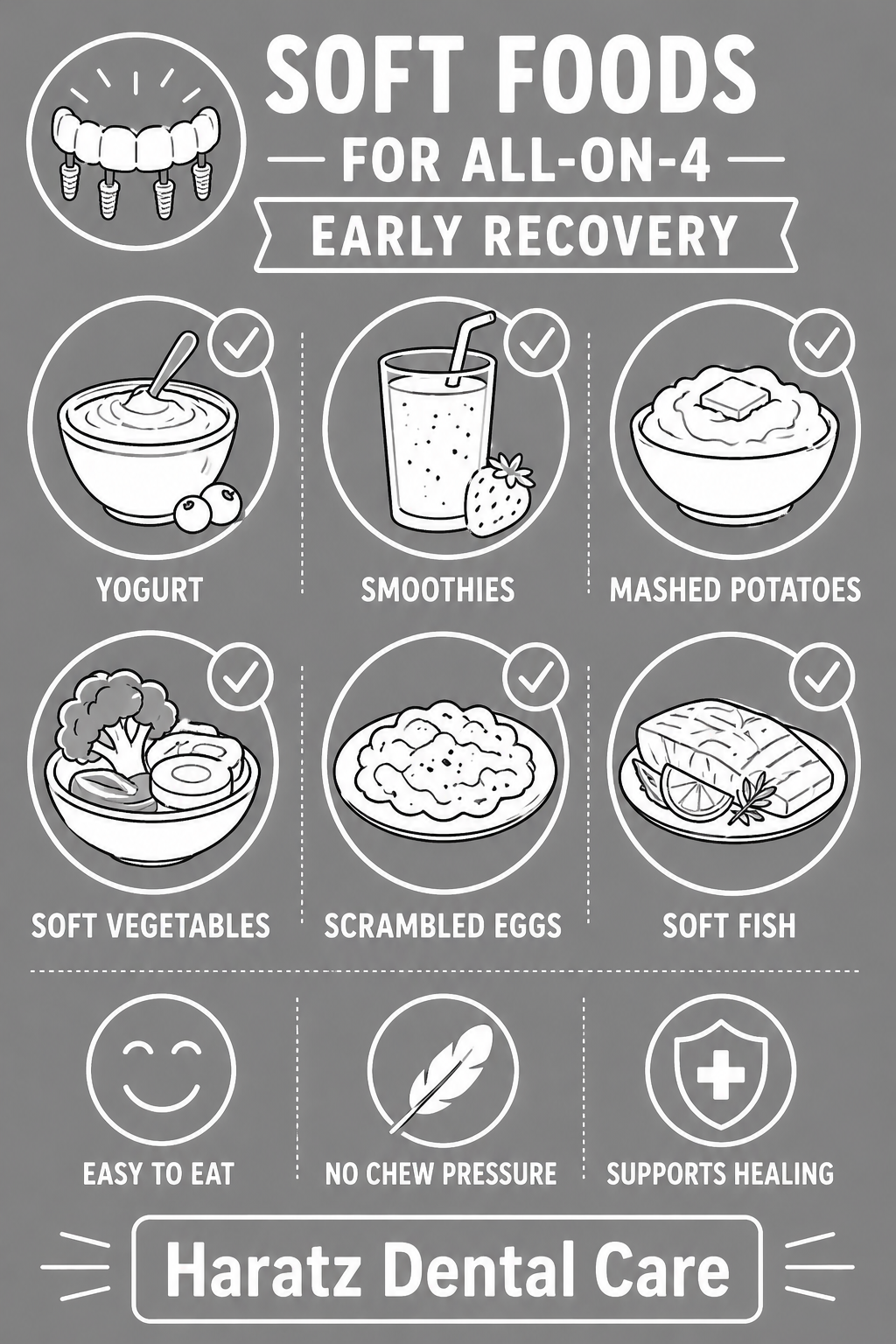
Following your care team's dietary guidance during this phase makes a measurable difference in how smoothly osseointegration progresses. Staying well hydrated and prioritizing protein-rich soft foods also supports tissue healing, since your body needs those building blocks to repair the surgical sites and strengthen the bond between bone and implant.
Progressing Toward a Full Diet
As healing advances, your diet expands with it. Most patients notice meaningful improvement around the six-week mark, when swelling has resolved and the implants have had time to establish a strong bond with the bone. Your care team monitors your progress at follow-up appointments and lets you know when it is safe to introduce firmer foods.
The Final Result
By the time your permanent prosthesis is placed and healing is complete, the chewing ability you have been working toward can become a full reality. Patients who avoided steak, crunchy vegetables, and crusty bread for years because of unstable dentures are often surprised by how natural and confident eating feels once dental implants are fully integrated. The stability that All-on-4 provides through dental implant surgery is fundamentally different from anything a traditional denture can offer, and food is where patients feel that difference most immediately.
What Affects How Quickly You Return to a Normal Diet
Healing timelines are not identical for every patient, and a few factors influence how quickly you move from soft foods to a full diet. The density and quality of your jawbone play a significant role in how securely your implants integrate, which is one reason we evaluate how bone density affects dental implant candidacy before finalizing your treatment plan. Smoking, uncontrolled diabetes, and certain medications can also slow healing and may extend the soft food phase.
How closely you follow your care team's guidance matters as much as biology. Patients who stick to the recommended diet progression and attend every follow-up appointment tend to reach a full diet on the timeline we outline, while skipping ahead to firmer foods too soon can put unnecessary stress on healing implant sites.
Why All-on-4 Changes the Eating Experience
Traditional dentures rest on top of the gum tissue and can shift, rock, or create pressure points when chewing. That instability quietly shapes what patients feel comfortable ordering at a restaurant or preparing at home, and many adjust their diets in ways they do not even fully realize.
All-on-4 eliminates that problem because the prosthesis anchors directly to four strategically placed implants in the jawbone, giving it functional stability similar to natural teeth and the confidence to eat without second-guessing every bite.
Recovering From All-on-4 Surgery, Step by Step
Diet is only one part of the recovery picture. We outline the full healing process, including swelling, discomfort management, and activity restrictions, in our guide to what to expect during dental implant recovery. Once your implants have integrated and it is time to move from your temporary prosthesis to your final one, our overview of implant restoration after dental implants explains what that final step involves and why it matters for long-term comfort and function.
Is All-on-4 Right for You?
All-on-4 is designed for patients who are missing most or all of their teeth in one arch, or who are dealing with failing teeth and want to avoid the slipping and adhesives that come with traditional dentures. Because the four implants are placed at strategic angles, many patients qualify even with some bone loss that would rule out other options. You can review the general criteria in our guide on whether you are a candidate for dental implants, though a consultation and imaging are the only way to confirm your specific treatment plan. Patients with more significant bone loss sometimes explore All-on-6, which uses two additional implants for extra support, but the eating timeline and long-term chewing stability are similar between the two approaches.
Frequently Asked Questions About Eating After All-on-4
How soon after All-on-4 surgery can I eat solid food?
Most patients stay on soft foods for the first few weeks while the implants begin integrating with the jawbone. Firmer foods are typically introduced gradually starting around the six-week mark, based on how your individual healing is progressing.
Do I get a temporary prosthesis I can eat with right after surgery?
Yes, All-on-4 typically includes a temporary set of teeth placed the same day as surgery, which lets you eat soft foods while your implants heal. This temporary prosthesis is later replaced with your final, permanent restoration once integration is complete.
Can I eat the same foods I ate before losing my teeth?
Once healing is complete and your final prosthesis is in place, most patients can return to the foods they enjoyed before tooth loss, including steak, crunchy vegetables, and crusty bread. Every patient's timeline and results vary based on healing and individual anatomy.
What happens if I eat hard foods too soon?
Introducing hard or crunchy foods before your implants have fully integrated can put unnecessary pressure on the healing bone and surgical sites. Following your care team's diet progression closely gives osseointegration the best chance to proceed without complications.
Does All-on-4 feel different from eating with natural teeth?
Because the prosthesis anchors directly to implants in the jawbone rather than resting on the gum tissue, most patients describe the chewing sensation as close to natural teeth. This is a significant difference from traditional dentures, which can shift or create pressure points during chewing.
Schedule Your All-on-4 Consultation at Haratz Dental
If you have been living with missing teeth or struggling with traditional dentures, All-on-4 offers a path to a complete smile and the full mouth reconstruction you deserve. At Haratz Dental, Dr. Haratz, Dr. Rand, and Dr. Maya bring together cosmetic and surgical precision to guide you from consultation through a restored, fully functional smile. We accept most PPO insurance plans, offer flexible financing, and our family dental team serves patients across Aventura and surrounding South Florida communities in English, Spanish, and Hebrew.
To take the first step toward eating freely again, we invite you to contact our Aventura office and schedule your All-on-4 consultation. We are ready to answer every question and help you move forward with confidence.
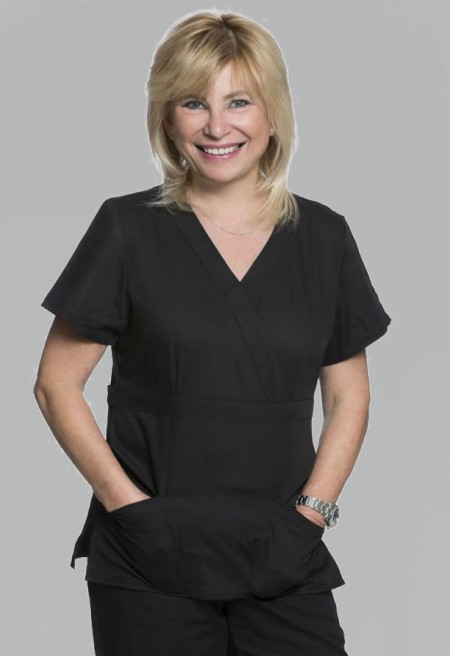
Dr. Adela Haratz, DDS
Dr. Adela Haratz is the founder of Haratz Dental and has more than 40 years of experience in dentistry. She is recognized as an aesthetic and scientific authority in dental artistry and facial aesthetics, and fellow dentists regularly turn to her for continuing education.
She earned her degree from the University of Miami and opened her private practice in Aventura in 2010. A member of the American Dental Association and the American Academy of Cosmetic Dentistry, Dr. Haratz focuses on veneers, smile design, full mouth rehabilitation, and root canal therapy. She and her team care for patients in English, Spanish, and Hebrew near Aventura, FL.