
How Bone Density Affects Your Eligibility for Dental Implants
A titanium post is only as reliable as the bone holding it in place. When patients begin researching dental implant surgery, the conversation almost always starts with cost, recovery time, and how the final result will look. Rarely does anyone walk in asking about bone mineral density or jaw volume, yet that single factor often determines whether treatment moves forward on schedule, requires a preparatory procedure first, or takes a different direction entirely. At Haratz Dental in Aventura, Dr. Adela Haratz evaluates jawbone quality during every implant consultation because guessing leads to complications. With over 30 years of experience restoring smiles and an oral surgeon on staff, our team provides the imaging, the honest assessment, and the full range of solutions under one roof. Whether your bone is strong enough today or needs rebuilding first, we map out the clearest path to a permanent result.Why Jawbone Quality Determines Implant Success
Dental implants work because of a biological process called osseointegration. After the titanium post is surgically placed into the jaw, the surrounding bone cells grow directly onto the implant surface over the course of several months. That fusion is what transforms a metal post into a functional tooth root capable of withstanding years of chewing force. Dense, healthy bone grips the implant tightly from the moment of placement, giving it what clinicians call primary stability. That initial hold matters enormously. If the post shifts even slightly during the healing window, the bone cells cannot attach properly, and the implant fails before integration ever completes. Bone that is too thin, too soft, or too shallow simply cannot provide enough surface contact to keep the implant locked in position while the biology does its work. This is not a matter of opinion or clinical preference. A large-scale retrospective study published through the National Institutes of Health analyzed over 158,000 dental implants placed between 2014 and 2022 and found that anatomical factors, including bone quality and jaw location, were among the strongest independent predictors of whether an implant succeeded or failed. The maxilla, which tends to have softer bone than the mandible, carried a higher failure risk across the entire dataset. Bone quality is not a preference. It is a measurable, testable prerequisite.What Causes Bone Loss in the Jaw
Understanding why bone disappears helps explain why so many implant candidates need additional evaluation before moving forward. Jawbone does not maintain itself passively. It requires constant mechanical stimulation from the roots of your teeth, and when that stimulation stops, resorption begins.Tooth Loss and the Ticking Clock
The most common cause of insufficient bone is the gap itself. Once a tooth is extracted or falls out, the alveolar bone underneath it begins to shrink. Studies have documented measurable width loss within the first three months and significant vertical loss within the first year. A patient who lost a molar five years ago has substantially less bone at that site than someone who lost the same tooth last month. The longer the gap goes untreated, the more rebuilding the site will need before an implant can be placed. This is one reason dentists encourage patients to consider implants sooner rather than later. Every month of delay narrows the treatment options.Medical Conditions That Weaken Bone
Osteoporosis reduces bone mineral density throughout the body, and the jaw is no exception. Patients on long-term corticosteroid therapy, those who have undergone radiation to the head or neck, and individuals with uncontrolled diabetes all face increased risk of compromised bone at the implant site. Medications like bisphosphonates, often prescribed for osteoporosis itself, can complicate healing and require careful coordination between your dentist and physician before implant surgery proceeds. These conditions do not automatically disqualify a patient, but they do change the timeline and the preparatory steps involved.Periodontal Disease
Advanced gum disease attacks the bone that supports teeth from the outside in. By the time teeth loosen and fall out due to periodontitis, the surrounding bone has often eroded well below the threshold needed for straightforward implant placement. Treating the active infection is always the first step. Placing an implant into a jaw with unresolved periodontal disease is like building a house on a crumbling foundation. The infection will continue to destroy bone around the new implant just as it destroyed bone around the original teeth.How Dentists Measure Bone Density Before Placing Implants
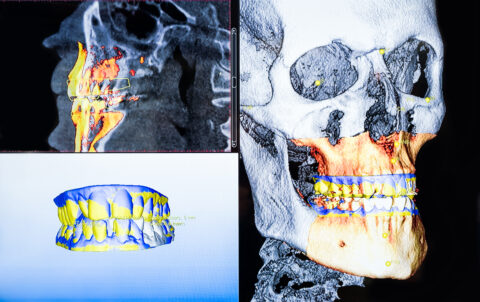
A standard dental X-ray gives a flat, two-dimensional snapshot that hints at bone levels but cannot measure density or three-dimensional volume with any precision. For implant planning, that is not enough. Cone beam computed tomography, commonly called a CBCT scan, produces a detailed 3D reconstruction of the jawbone. The scan captures bone height, width, angulation, and density at the exact site where the implant would go. It also maps the proximity of critical structures like the inferior alveolar nerve in the lower jaw and the maxillary sinus in the upper jaw, both of which constrain where and how deeply an implant can be placed. During your dental implant consultation, our team walks through these images with you on screen so you see exactly what we see. If the bone measures within acceptable thresholds, treatment planning moves forward. If it does not, the scan tells us precisely how much volume is missing and where, which determines which rebuilding approach makes the most sense. There is no guesswork involved. The scan answers the question definitively: is there enough bone, and if not, how much needs to be added?When Low Bone Density Changes Your Treatment Path
Not every patient who hears “your bone is thin” needs to abandon the idea of implants. In most cases, it simply means the treatment plan adds a preparatory step. The goal of that step is always the same: rebuild enough bone volume and density to give the implant the foundation it needs to integrate permanently. What changes is the timeline. A patient with adequate bone may go from consultation to implant placement within a few weeks. A patient who needs bone augmentation first may add three to six months of healing before the implant can be placed. The final result, a permanent, functional, natural-looking tooth, is the same. The route just takes a detour.Bone Grafting Options That Rebuild the Foundation
A bone graft for dental implants works by introducing material into the deficient site that stimulates your body to regenerate new bone tissue. The graft acts as a scaffold. Over time, your own bone grows through and around the material, eventually replacing it with living, load-bearing bone. Several types of grafts exist, and the right one depends on the location and severity of the deficit.- Socket preservation: places graft material into the extraction socket immediately after a tooth is removed, preventing the rapid bone loss that would otherwise begin within weeks
- Ridge augmentation: rebuilds a jawbone ridge that has narrowed after prolonged tooth loss, restoring enough width for an implant post
- Sinus lift: elevates the sinus membrane in the upper jaw and packs bone material beneath it, adding the vertical height needed for posterior implants
- Block graft: transplants a section of bone from another area of the jaw or body to rebuild severely atrophied sites that need both height and width
Implant Techniques That Work Around Bone Loss
Modern implant dentistry has also developed placement strategies that reduce or eliminate the need for bone grafting in certain patients.All-on-4 and Angled Implant Placement
The All-on-4 procedure uses four strategically positioned implants to support a full arch of teeth. Two implants go straight into the front of the jaw, where bone tends to be densest, and two are angled at up to 45 degrees in the back, bypassing areas of thin bone and anchoring into stronger regions. This angulation often eliminates the need for sinus lifts or ridge augmentation entirely, and many patients receive a temporary set of teeth the same day. For patients with significant bone loss across the entire arch, All-on-4 can compress what would otherwise be a year-long sequence of grafts and waiting into a single surgical appointment.Zygomatic Implants for Severe Upper Jaw Loss
In cases where the upper jaw has lost so much bone that even angled implants cannot find sufficient purchase, zygomatic implants anchor into the cheekbone instead. This approach is far less common and requires advanced surgical training, but it exists as an option when other methods fall short. It is worth asking about during your consultation if you have been told your bone loss is too severe for standard implants.Does Osteoporosis Automatically Disqualify You From Implants?
No. Patients with osteoporosis can still receive dental implants, but the treatment plan needs to account for the systemic bone density reduction. Your dentist and physician may coordinate on medication timing, particularly if you take bisphosphonates, and healing periods may be extended to allow more time for osseointegration. The overall success rates for implants in osteoporotic patients remain high when these adjustments are made. Bone density at the jaw site matters more than a general osteoporosis diagnosis, and a CBCT scan can confirm whether the specific implant location has adequate bone regardless of what a DEXA scan shows elsewhere in the body.When Implants May Not Be the Right Fit
Honesty matters more than optimism when it comes to treatment planning. Some patients present with bone loss so severe, medical conditions so complex, or healing capacity so compromised that dental implants carry unacceptable risk even with grafting and extended timelines. In those situations, alternative restorations like implant-supported dentures, traditional bridges, or partial dentures may deliver a better outcome with less surgical burden. Knowing when to recommend an alternative is part of responsible care, and a thorough evaluation, including that CBCT scan, is what separates a thoughtful recommendation from a sales pitch. Understanding when implants are not the ideal solution brings the conversation back to the most important starting point: the evaluation itself. Every treatment decision flows from the data that scan provides.Schedule Your Implant Evaluation at Haratz Dental
Bone density is measurable, bone loss is treatable, and most patients who assume they do not qualify discover a clear path forward once the right imaging and clinical assessment are complete. At Haratz Dental, Dr. Haratz has spent over three decades creating natural, lasting smiles for patients throughout Aventura, Sunny Isles Beach, and Bal Harbour. Our practice offers every step of the implant process under one roof, from CBCT scans and bone grafts to surgical placement and final restoration, with an oral surgeon on staff and a team that communicates in English, Spanish, and Hebrew. We accept most PPO insurance plans, and financing through CareCredit and Cherry keeps treatment accessible for a wide range of budgets. If you have been told you lack the bone for implants, or if you simply want to find out where you stand, reach out to our team to schedule a consultation and get a definitive answer.
Written & Reviewed By
Dr. Adela Haratz, DDS
Dr. Adela Haratz is the founder of Haratz Dental and has more than 40 years of experience in dentistry. She is recognized as an aesthetic and scientific authority in dental artistry and facial aesthetics, and fellow dentists regularly turn to her for continuing education.
She earned her degree from the University of Miami and opened her private practice in Aventura in 2010. A member of the American Dental Association and the American Academy of Cosmetic Dentistry, Dr. Haratz focuses on veneers, smile design, full mouth rehabilitation, and root canal therapy. She and her team care for patients in English, Spanish, and Hebrew near Aventura, FL.