Is Laser Dentistry Less Painful Than Traditional Methods?
Fear of pain is one of the most common reasons people delay or avoid dental care altogether. The sound of a drill, the pressure of traditional instruments, and the anticipation of discomfort can make even a routine appointment feel daunting. Laser dentistry has changed that reality for many patients, offering a significantly gentler experience across a wide range of procedures while delivering precise, effective results. At Haratz Dental, our family dentist team has always been committed to combining clinical excellence with patient comfort. Dr. Adela Haratz has spent over 30 years refining her approach to dentistry, and our practice embraces the most advanced tools available to make every visit as comfortable as possible. For patients who have put off care due to anxiety or past discomfort, laser technology may be the turning point that brings them back to the chair.How Dental Lasers Work
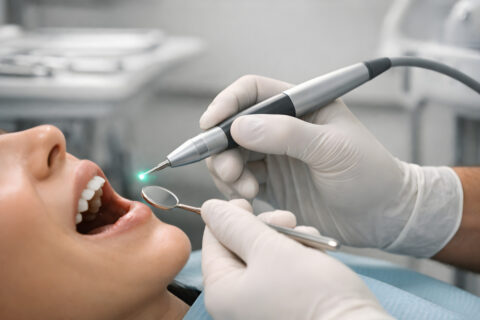
Dental lasers use focused light energy to treat tissue with a level of precision that traditional instruments simply cannot match. Instead of cutting with a blade or abrading with a drill, lasers interact with tissue at a cellular level, targeting only what needs to be addressed. This means less disturbance to the surrounding area, less bleeding, and a much smoother path to healing. There are two main types of dental lasers: hard tissue lasers, used on teeth and bone, and soft tissue lasers, used on gum tissue. Each serves a distinct purpose, and together they expand what is possible without relying on the methods many patients fear most. The result is a category of treatment that feels meaningfully different from the traditional dental experience.Is It Actually Less Painful?
For the vast majority of procedures, laser dentistry is substantially less uncomfortable than conventional methods. Because the laser cauterizes as it works, bleeding is minimal. Because it is so precise, healthy tissue is left largely undisturbed. In many soft tissue procedures, patients require little to no anesthesia at all. The sensory experience is also different in ways that matter. There is no vibration, no pressure, and no drilling sound. For patients managing dental anxiety, the absence of those familiar triggers can transform what a dental appointment feels like entirely. Many patients who once dreaded the dentist find laser procedures far more tolerable than they anticipated.What Can Lasers Treat?
Laser dentistry has a broad range of applications that spans both preventive and restorative care. Soft tissue lasers are particularly effective in treating gum disease, removing infected tissue with targeted accuracy while encouraging faster healing than traditional gum surgery. They are also used for contouring, lesion treatment, and procedures like frenectomies. Hard tissue lasers can be used to prepare teeth for fillings, treat early-stage decay, and address sensitivity. Some of the most common laser procedures we offer include the following:- Gum disease treatment and periodontal therapy
- Gum contouring and reshaping
- Cavity preparation and decay removal
- Oral lesion and cold sore treatment
- Frenectomies
- Tooth sensitivity reduction