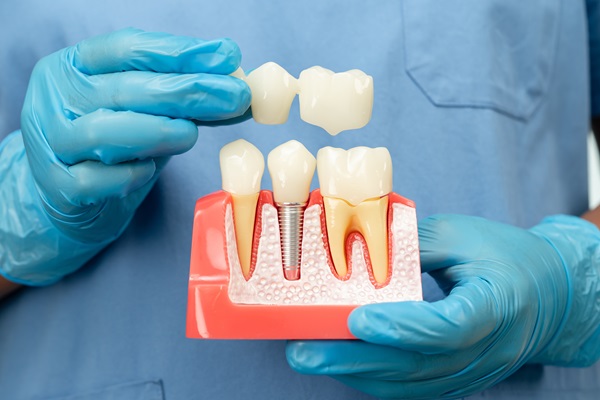
For people with gaps in their mouth due to missing teeth, dental implants can be a great replacement method. Implants provide a wide variety of benefits, and they last a long time. However, the procedure is more invasive than others, and it is not a good option for every patient. When considering them as a replacement option, make sure your dentist can answer all of your questions.
Questions to ask about dental implants
If you are new to the world of implants, you may not even know where to begin. These are some of the common questions people have about dental implants.
What are the benefits of implants over other replacement methods?
Because of how they are attached to the jawbone, implants are extremely stable, which allows the wearer to eat and speak normally. They look like natural teeth and are extremely durable. They also are permanently affixed, so not only do they never have to be taken out, but they will not slip around.
One of the big benefits is that they help preserve the bone and prevent further loss. When teeth are missing for long periods of time, the jawbone does not get the same biting force, and this causes it to lose density. Over time, there is bone loss, and this begins to affect the other teeth, causing them to move or loosen. Decreased bone density also affects the facial structures, which can cause sagging of the skin and a hallowed look. Implants prevent this.
Can anyone get dental implants?
Not everyone is a good candidate for implants. First, the person needs to have adequate jawbone structure and density so the implants have a foundation to affix to. Second, the person should have good habits, such as not smoking and having good oral hygiene. Third, the individual should not have any medical condition that interferes with blood clotting or healing ability.
How long does it take to get implants?
The dental implant process is not quick. The average time for completion ranges from six to 12 months. However, if the patient needs a tooth extraction or bone graft, this time will be longer. The total time also depends on how quickly the tissues heal.
What is the dental implants process?
Initially, the implants, which are titanium rods, are inserted into the jawbone. This needs time for the bone and rods to integrate and for the gums to heal. Next, an abutment, or connector, is screwed into the top of each implant, and the area needs to heal. Then a temporary crown is placed on each abutment. Once the permanent crowns have been made, they are attached to form the permanent teeth.
Can someone get implants if they do not have adequate bone density?
Although a good candidate needs to have enough jawbone to be able to hold the titanium rods, a person with inadequate bone density may still be able to get implants. If the patient meets the other requirements, he or she may be eligible for a bone graft. For this procedure, the dentist uses synthetic material or bone from somewhere else in the body. This is then affixed to the bone of the jaw and allowed to grow and strengthen with it.
What does the healing process require?
After each surgical step, the gums need to heal. They may have some discomfort and tenderness, so the dentist may recommend over-the-counter pain meds. There will also be specific eating instructions for the first week or two, and this often includes soft foods like mashed potatoes, yogurt, smoothies, and soups.
There is no healing time required after the final placing of the permanent crowns. However, the dentist may have some cleaning and care instructions as well as tips on how to get used to them if the patient has lived with a mouth void of teeth for a while.
How long do implants last?
Because of their stability and quality of materials, implants can last a long time. With proper care and hygiene, most dental implants can last a lifetime.
Are implants easy to care for?
Implants are cared for just like regular teeth. They can be flossed and brushed like normal. They should also be professionally cleaned and examined twice a year by a dentist.
Conclusion
Getting dental implants can make a big difference in one's appearance and confidence. They are a good option for many people who need to replace missing teeth. However, it is important to know what getting them entails.
Few dental procedures carry as much anticipation as wisdom tooth removal. Whether a dentist has flagged the need during a routine exam or discomfort in the back of the mouth has finally made the decision unavoidable, most patients arrive at their consultation with the same question on their minds: what is this actually going to…
You look in the mirror and notice one tooth that sits slightly longer than the rest, or a chipped edge that catches your eye every time you smile. These small imperfections can feel larger than they are, quietly shaping how confident you feel showing off your teeth. For patients who want results without the time,…
For many patients, the decision to get dentures feels like a finish line after the long journey of tooth loss. What they do not always expect is that there may be one more step before that restoration can actually be placed. Pre-prosthetic surgery is a term patients frequently encounter once they begin the consultation process,…
If you've been dreaming of a brighter, more even smile but feel hesitant about removing tooth enamel, you're not alone. Many people want cosmetic improvements without anything too permanent or invasive. That's exactly where Lumineers come in. These ultra-thin porcelain shells offer a way to transform your smile with minimal preparation, making them one of…
For a limited time, Haratz Dental is offering $1,000 off Invisalign treatment. Individuals who start together save even more — each person receives an additional $250 off when two patients begin treatment at the same time.